

Bronze, quartz, bamboo and breath
Sound healing
Gongs, bowls, didgeridoo and flutes
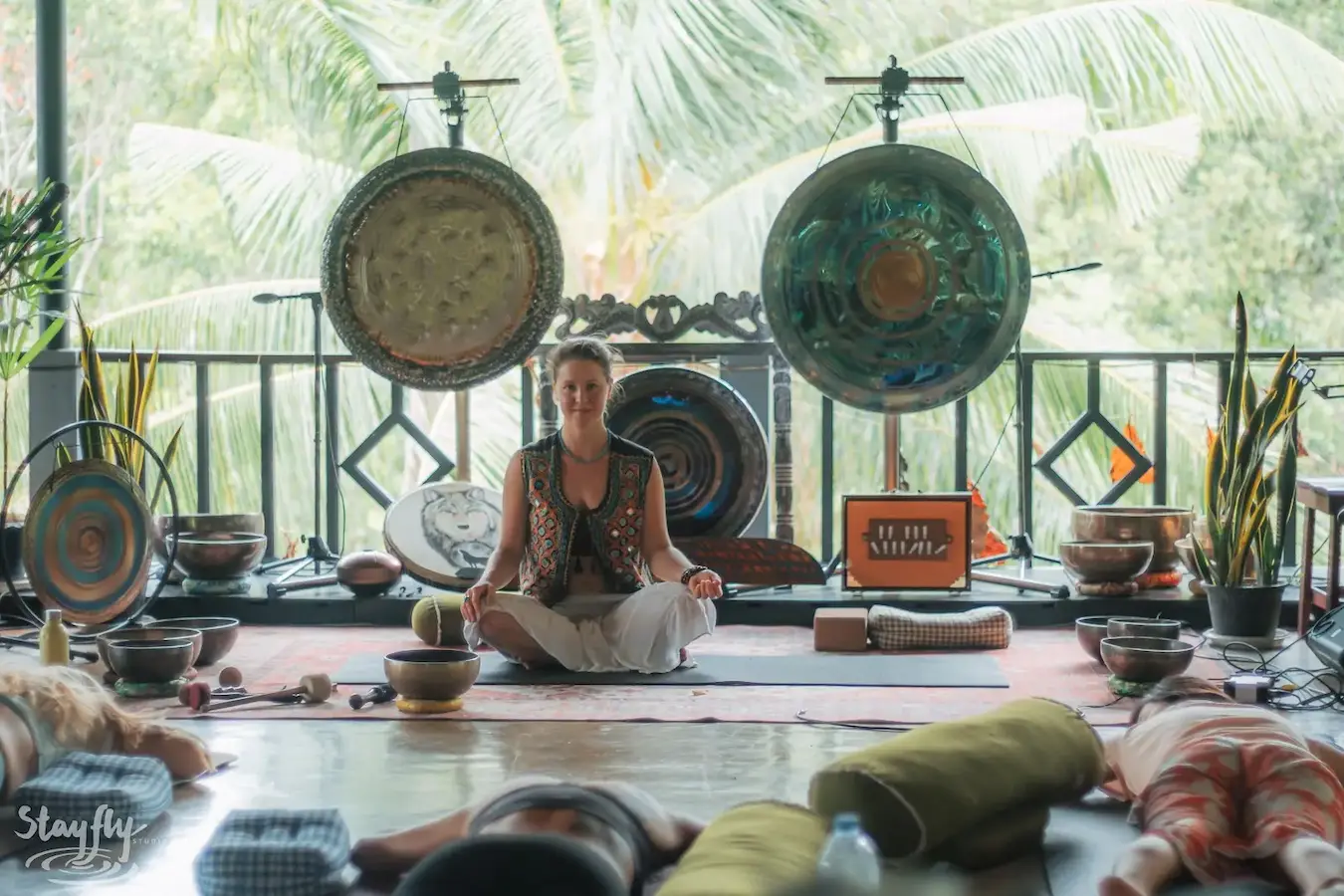
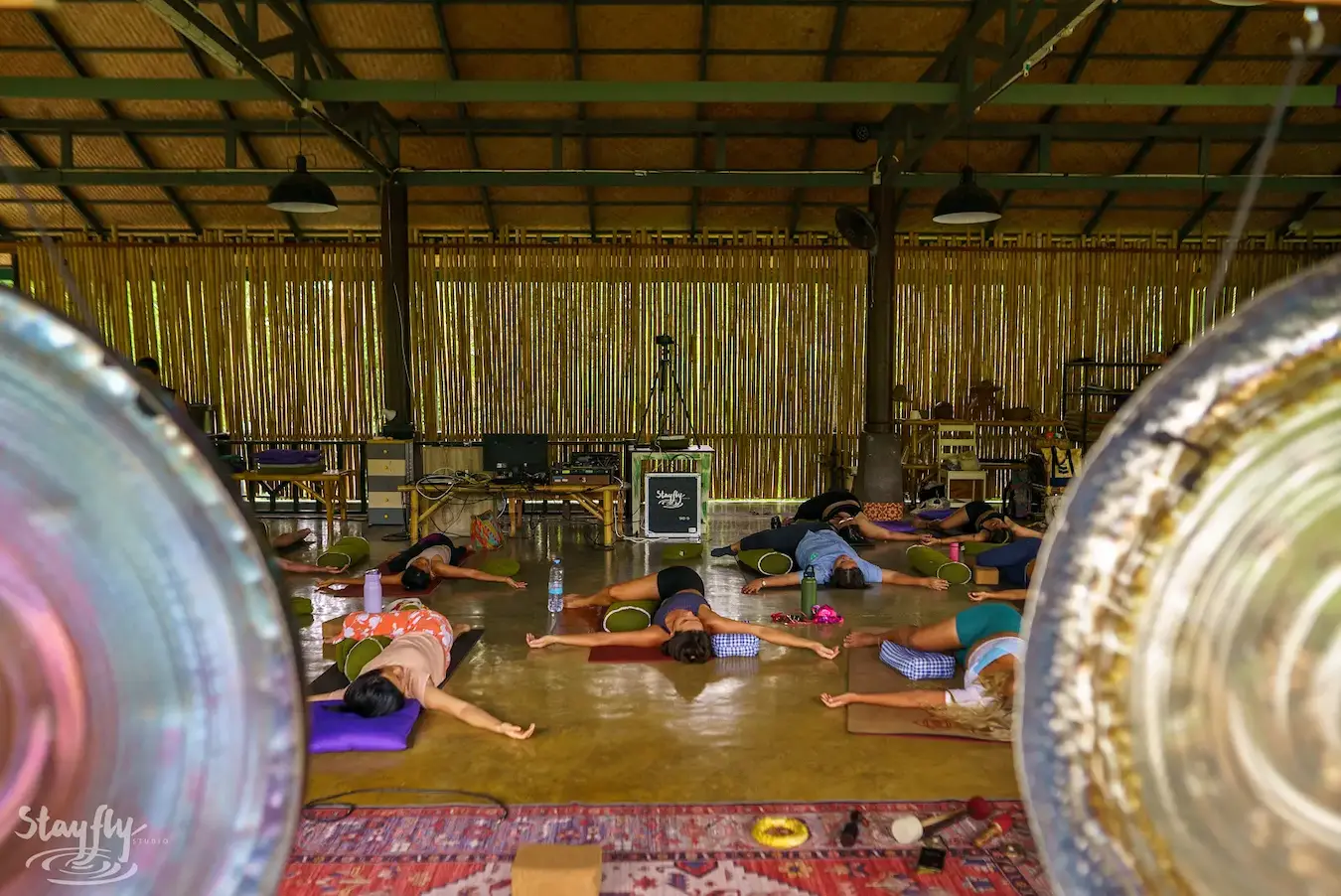
A sound session at Awakenest is played, not pressed play on. Someone kneels on a rug with their own instruments laid out in front of them, and for an hour or so the room fills with sound that is made in it.
ซาวด์ฮีลลิ่งที่ Awakenest เล่นสด ด้วยเครื่องดนตรีจริงในมือของผู้เล่น
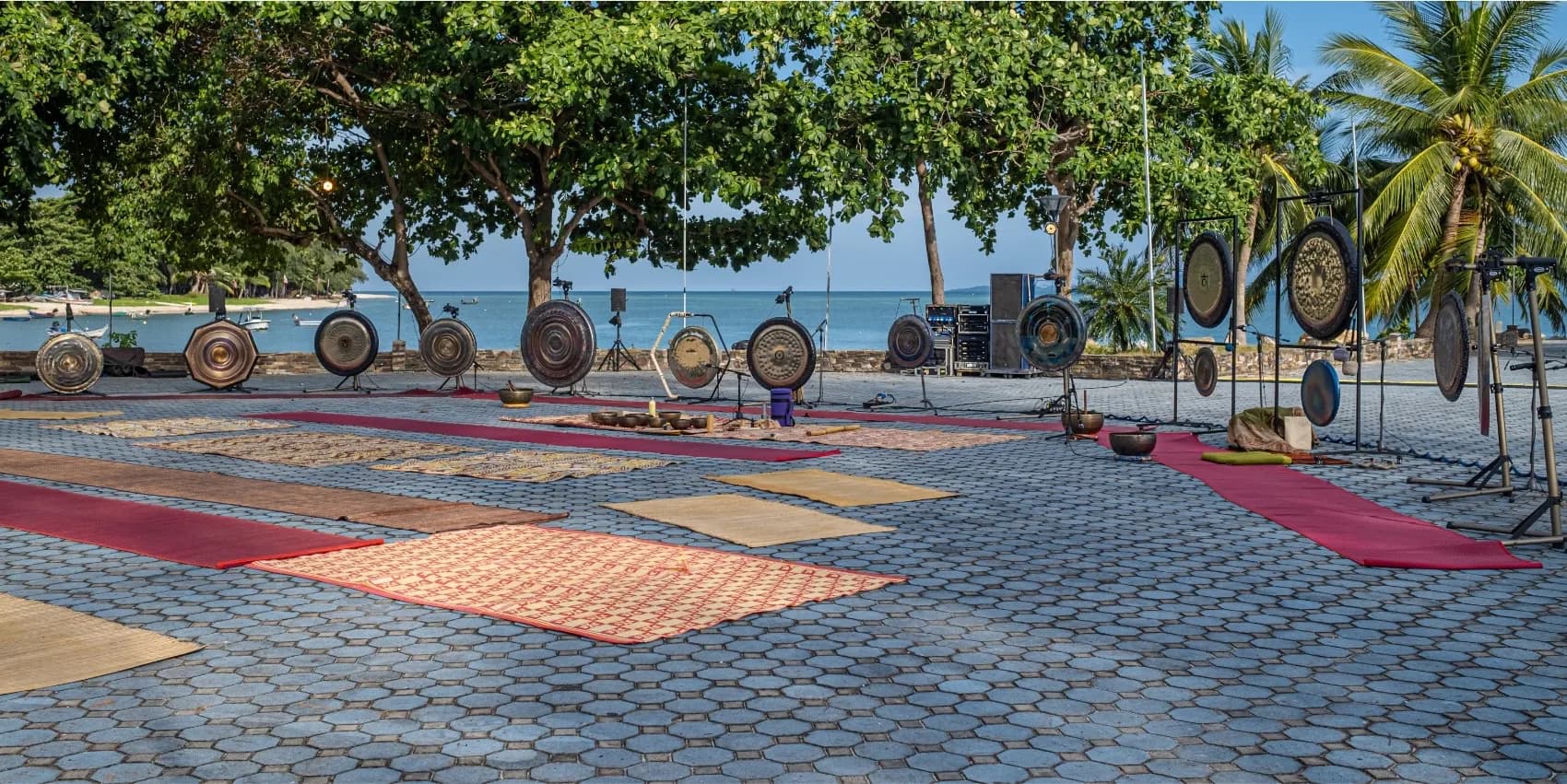
There is no fixed instrument list and no two practitioners bring the same one. What follows is what turns up most often on the island, roughly in the order you hear it: something to hold the ground, something to ring over it, something to breathe through, something to carry a melody.
Gongs
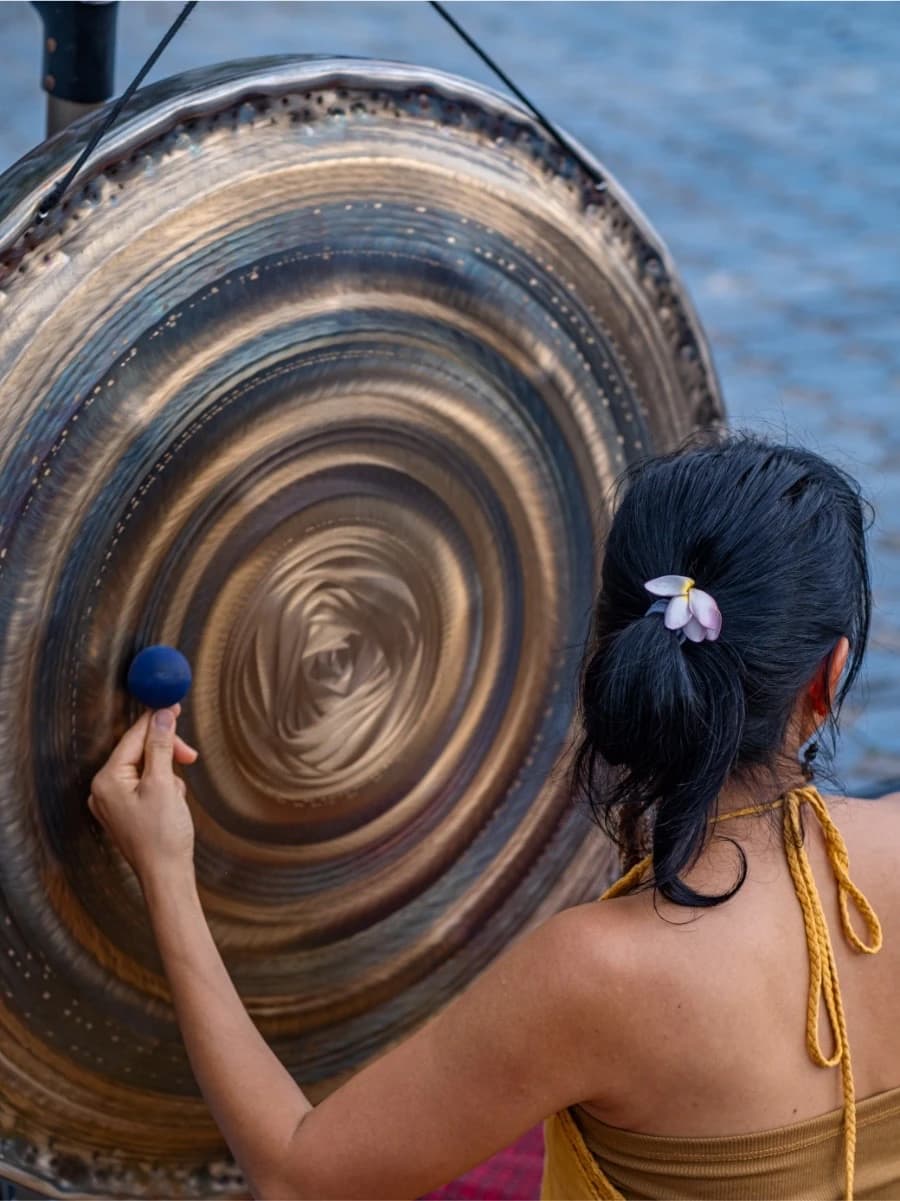
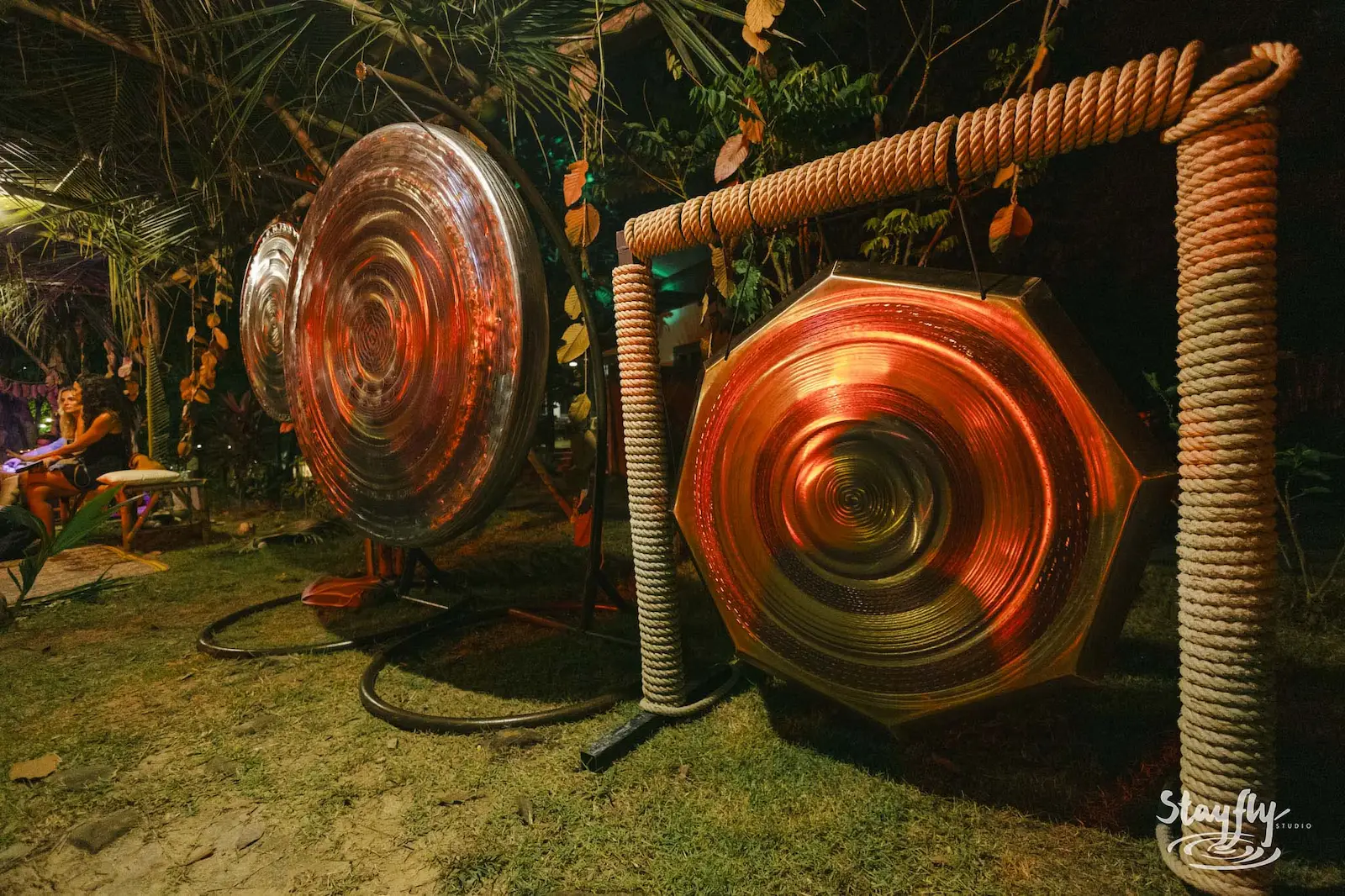
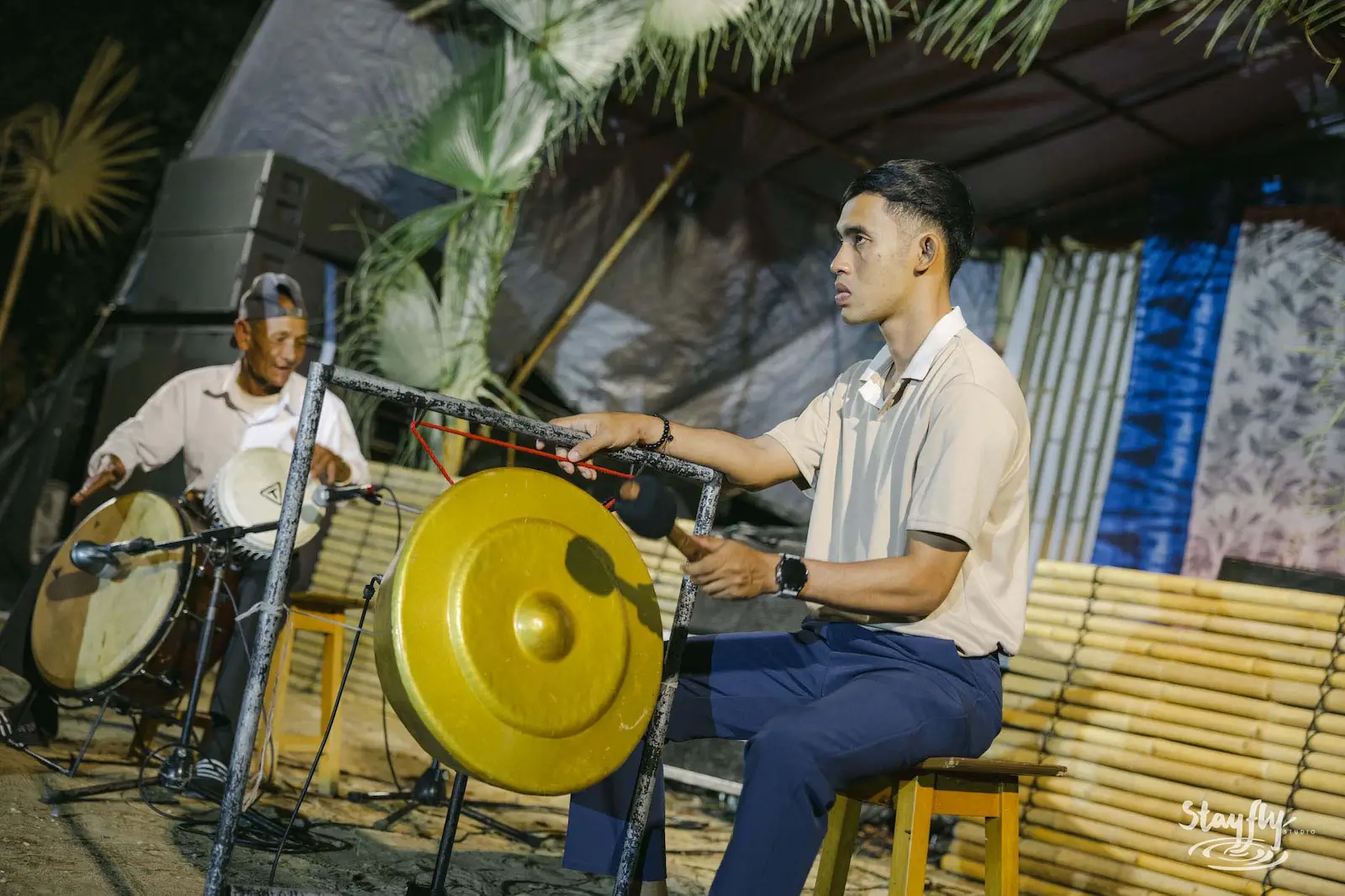
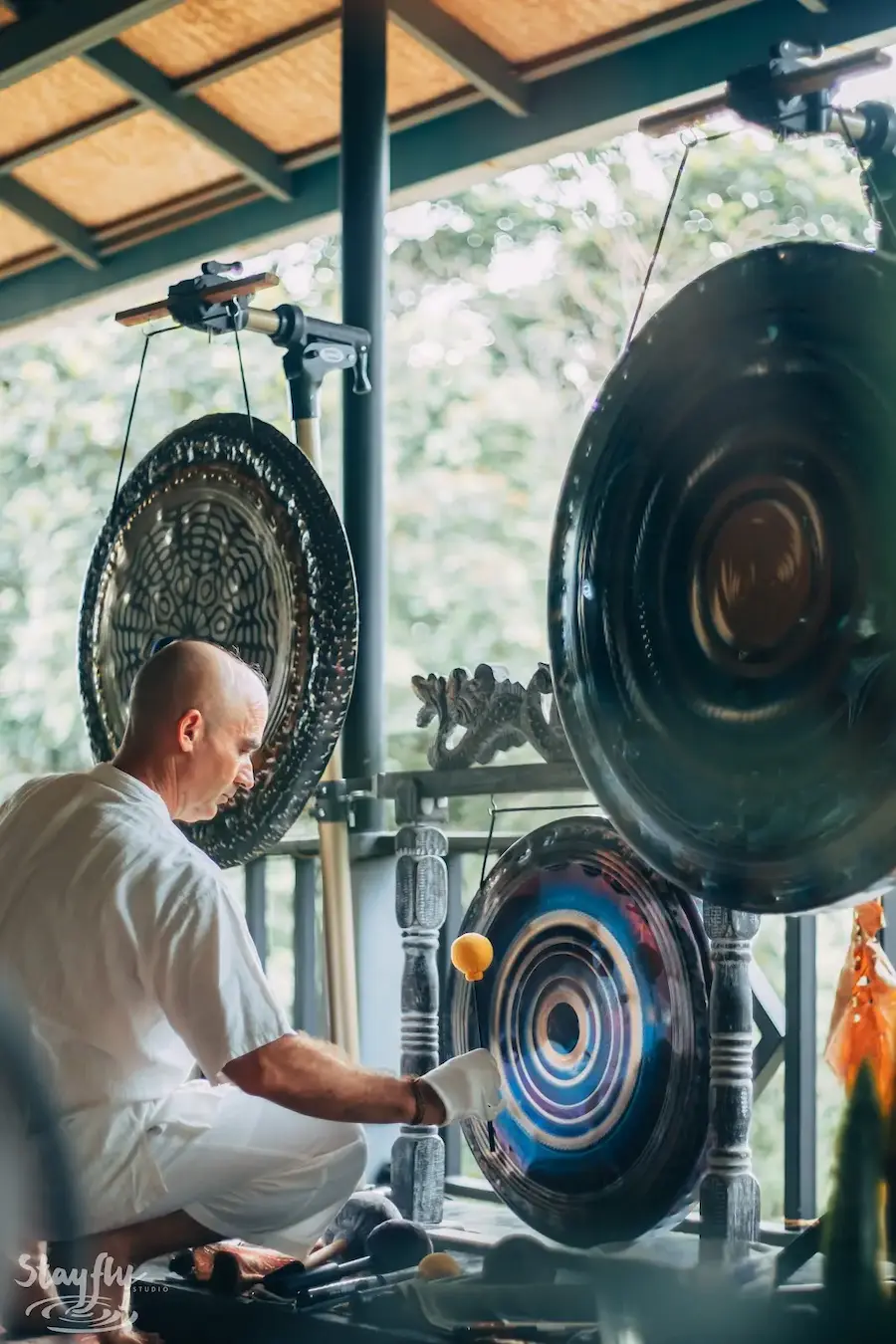
A hammered bronze disc, the largest of ours a metre across, struck with a felt mallet rather than a hard stick. A gong does not give you a note. It gives you a wash that keeps arriving after the strike, builds while you are still listening to it, and takes a long time to leave.
Gongs have been cast and played across China, Java, Bali and the Thai temples for centuries, for ceremony and for marking the hours. On the beach here they are set in a row facing the water, so the sound crosses the mats rather than pointing at them.
Singing bowls
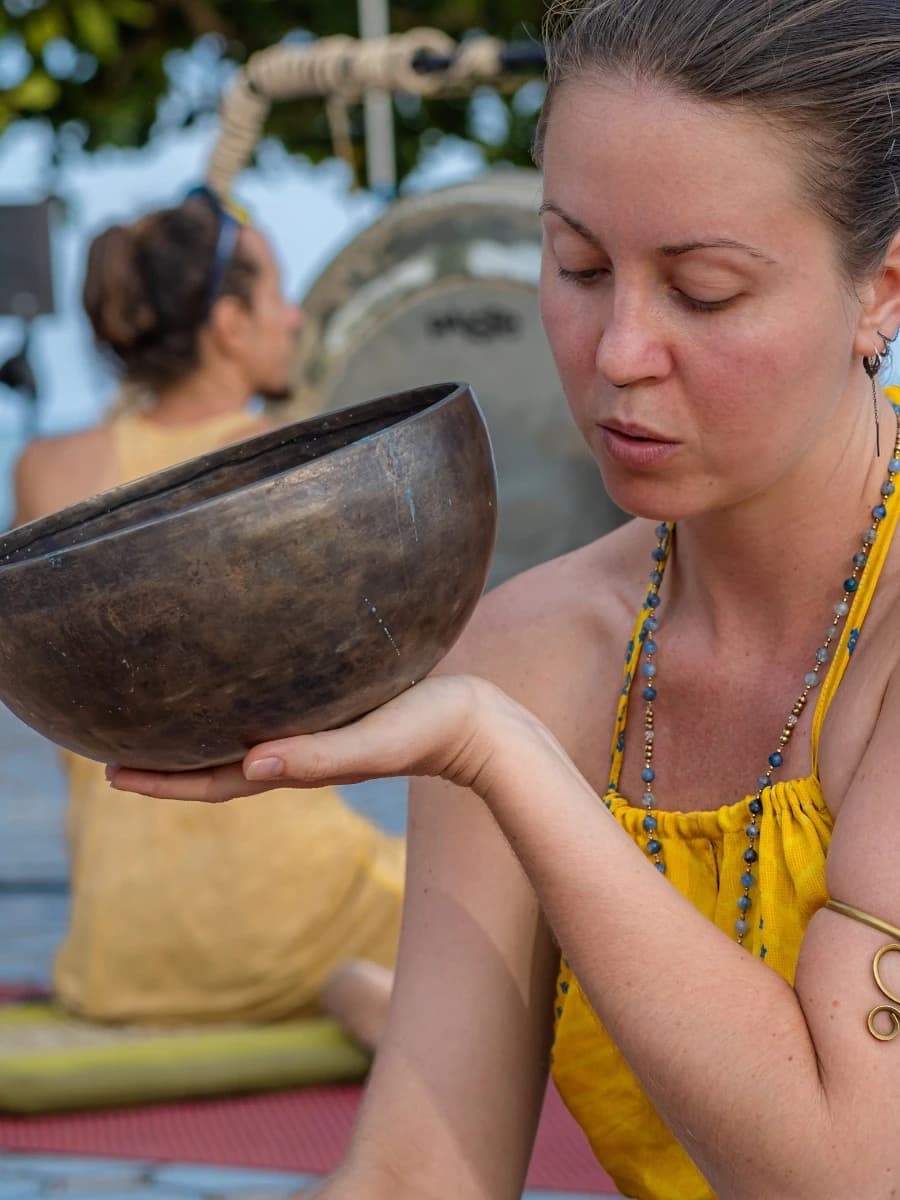
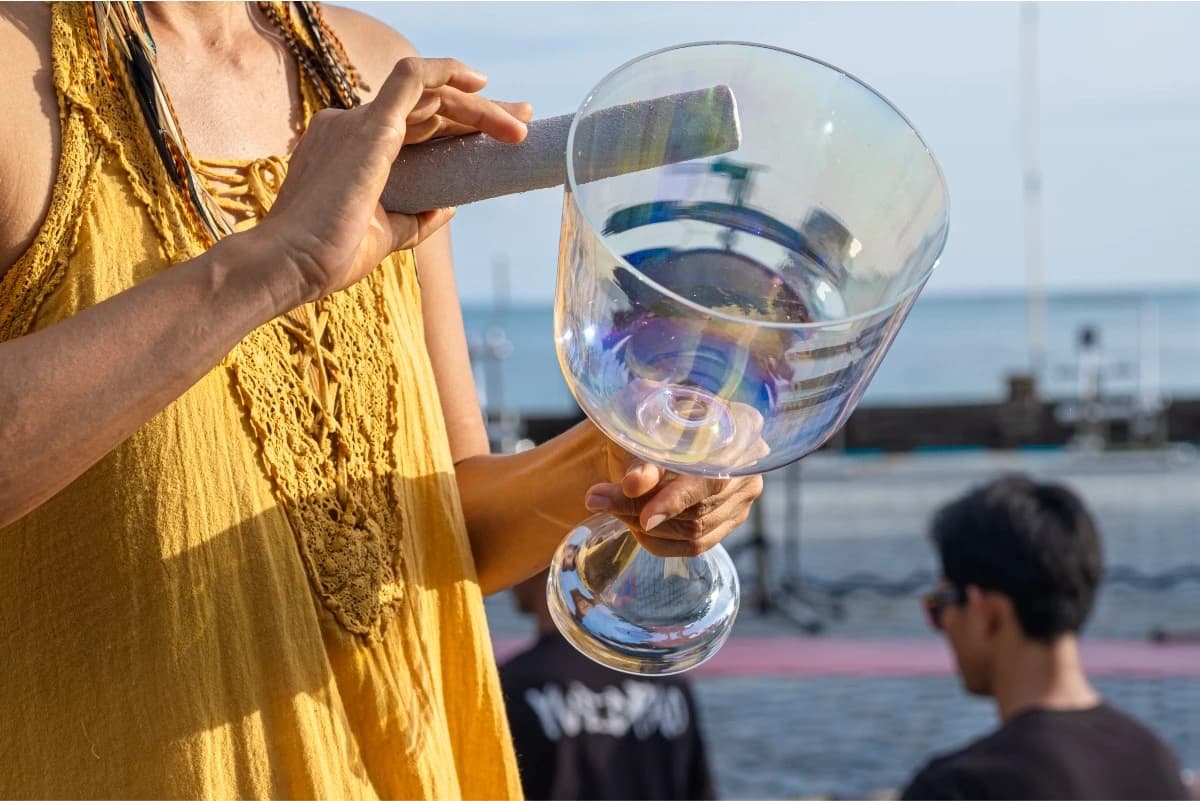
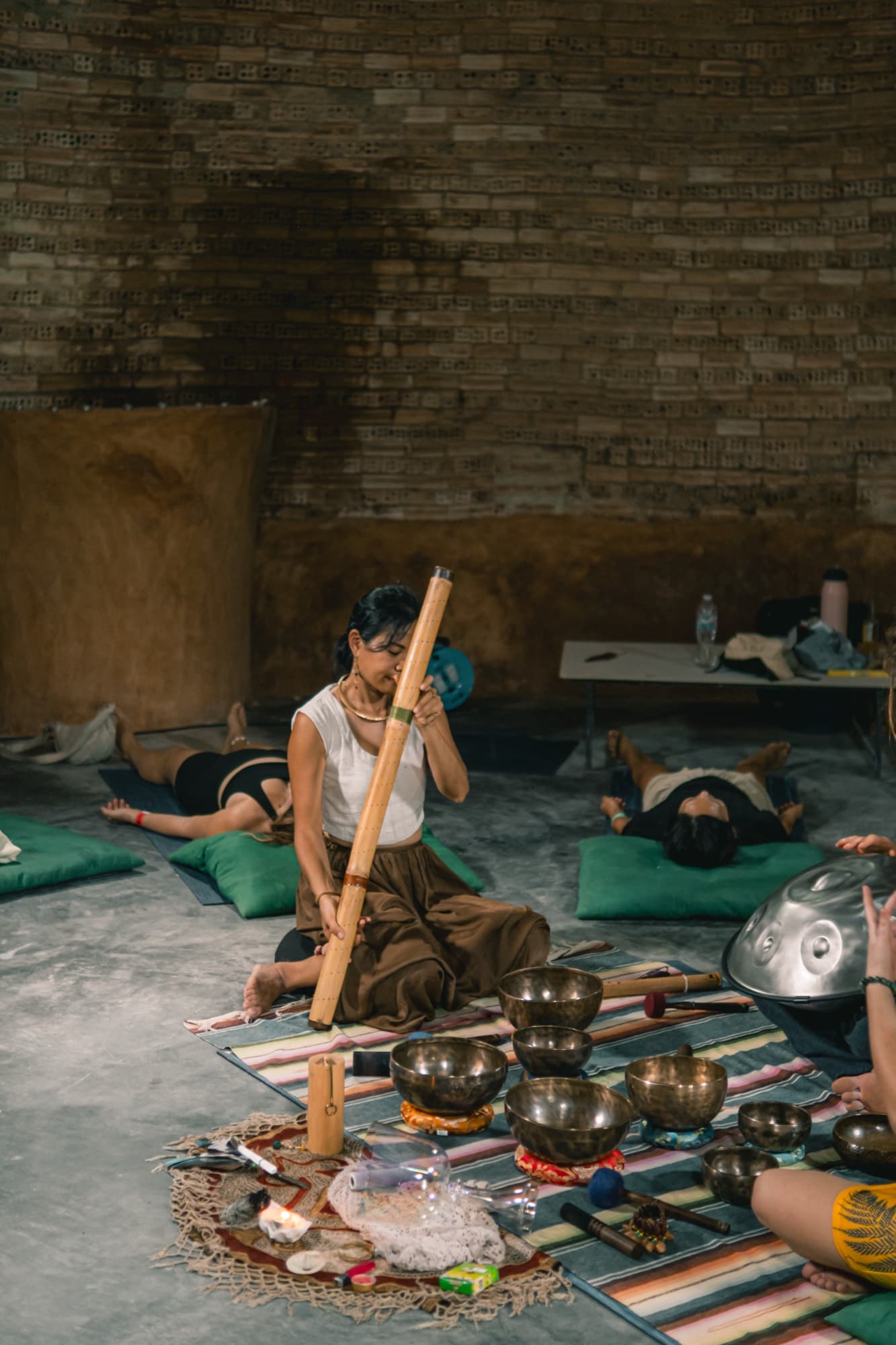
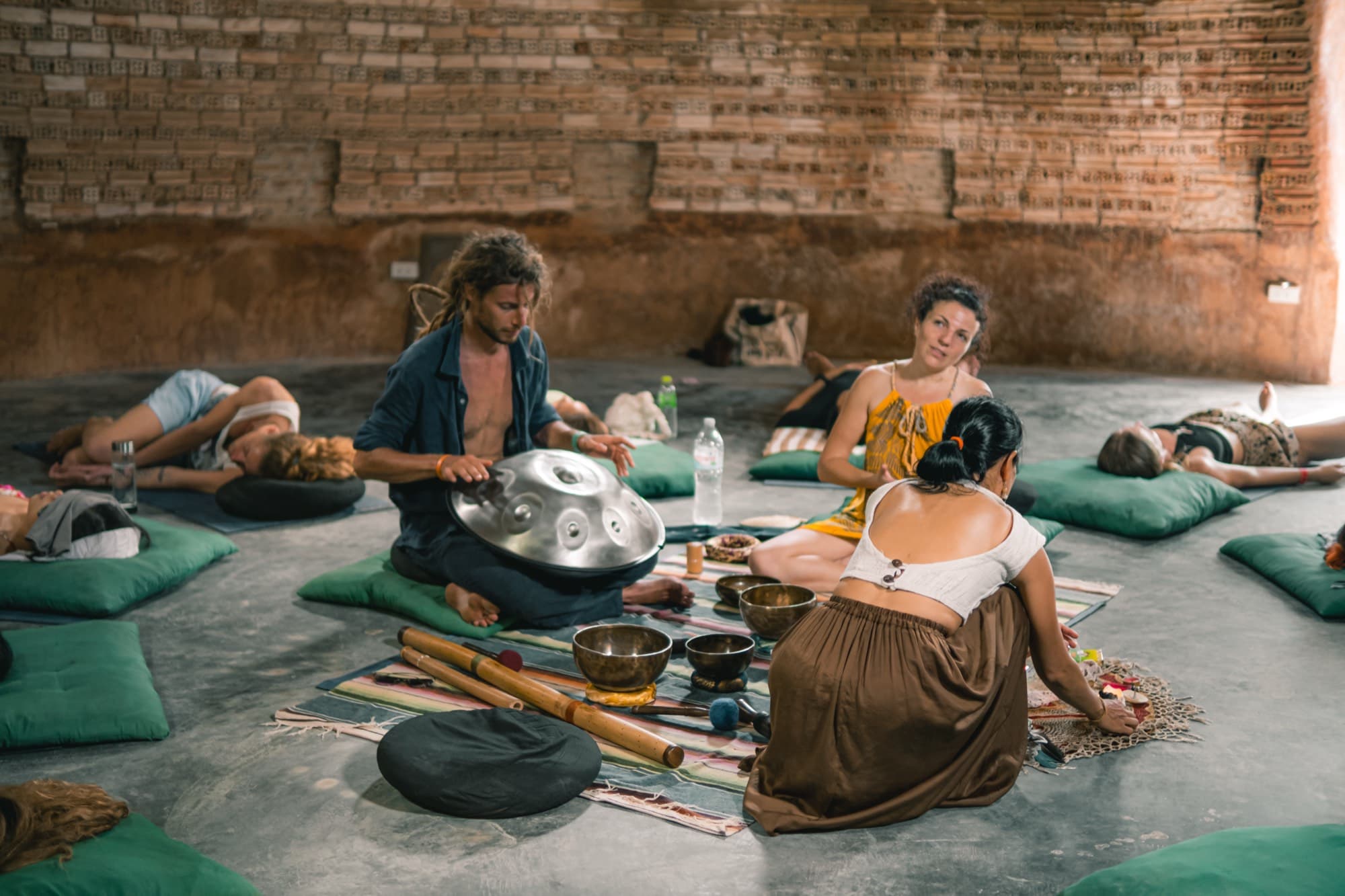
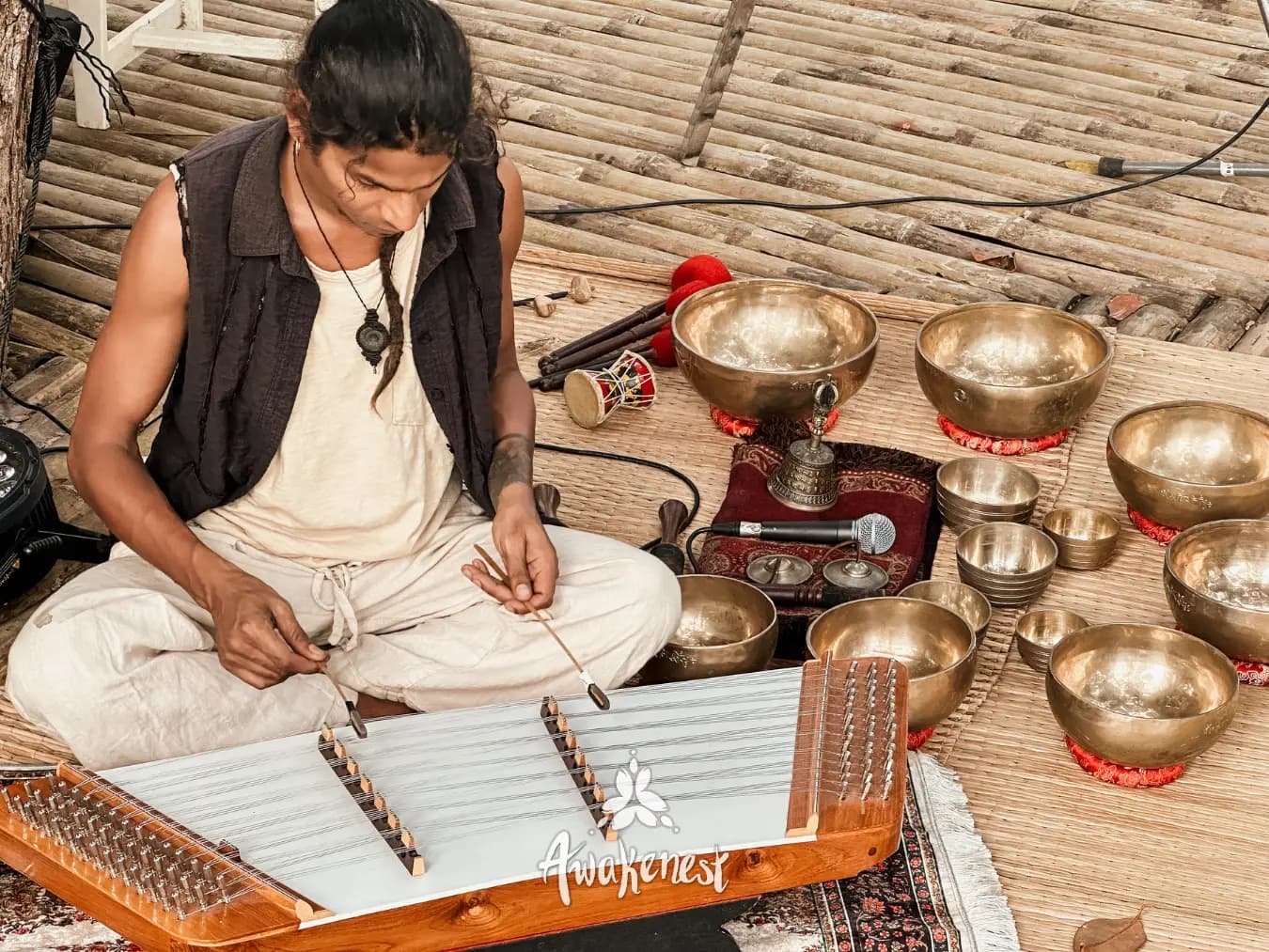
Two families sit side by side on the same rug. Himalayan bowls are hammered from bronze, never quite round, and no two of them have the same voice. Crystal bowls are ground from quartz and ring purer and far longer, one clean tone that just holds.
Both are played the same two ways: struck once on the rim, or walked round the rim with a leather wrapped stick until the material starts to hum on its own. Practitioners buy them by ear, one at a time, the way anyone builds an instrument collection.
Didgeridoo
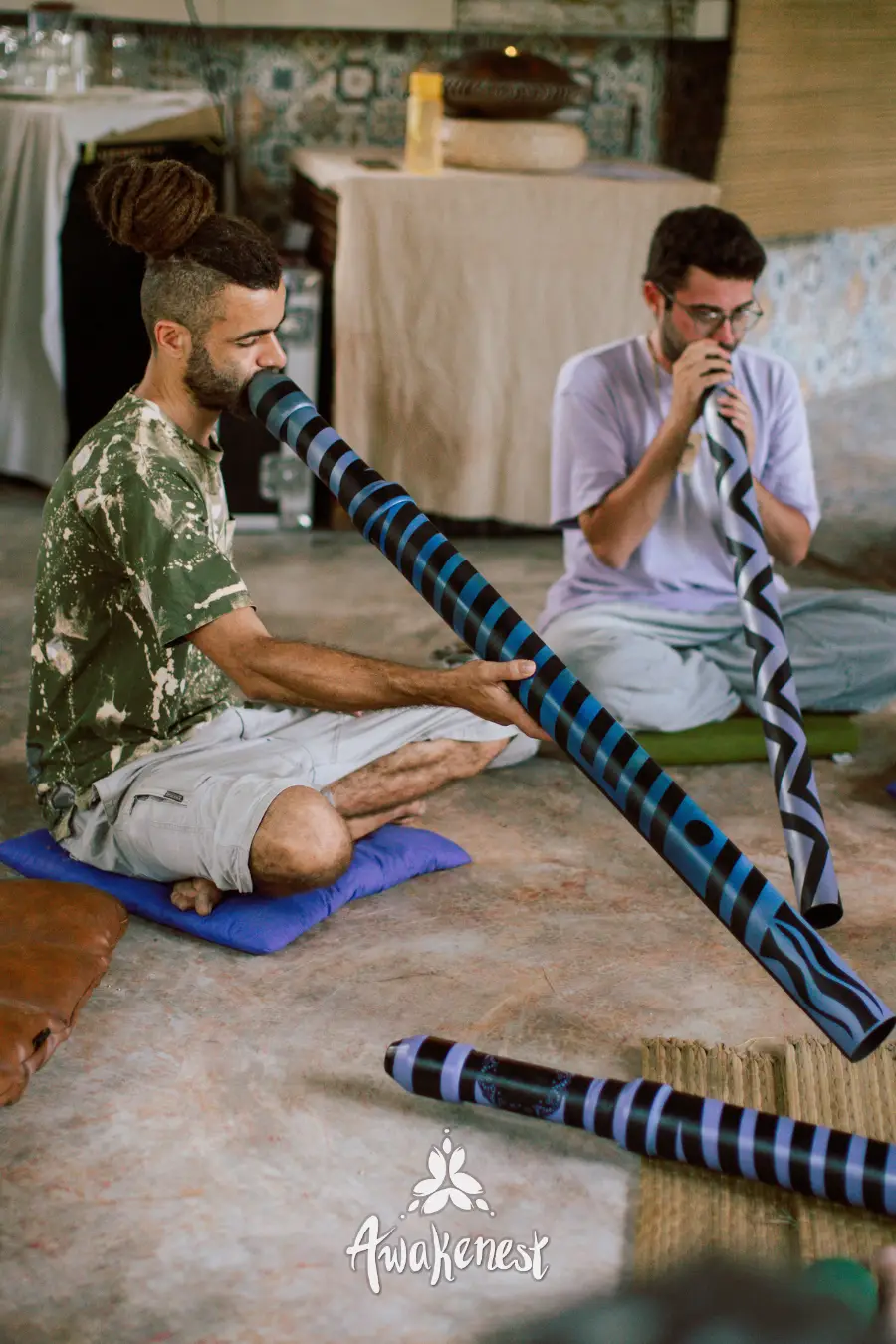
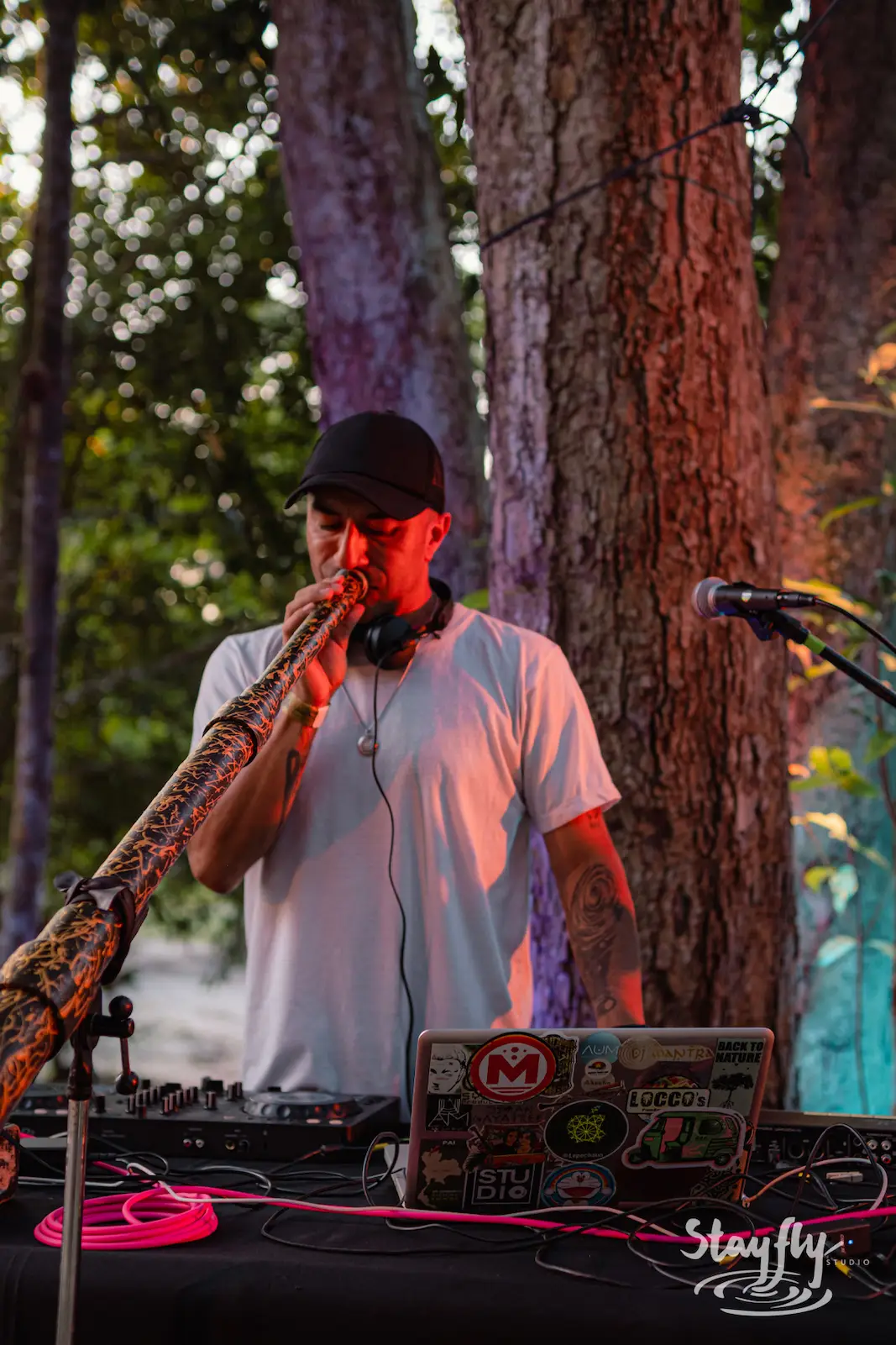
An open tube, played by buzzing the lips into one end. The player breathes in through the nose while pushing air out of the cheeks, so the drone never stops for a breath and can run as long as they can hold the pattern.
The instrument belongs to the Aboriginal peoples of northern Australia, where it is cut from eucalyptus hollowed out by termites and carries names of its own, yidaki among them. The ones played here are bamboo, which is what grows on this island.
Held close, it is felt as much as heard. Players often work it low along the floor, where the air moves.
Flutes
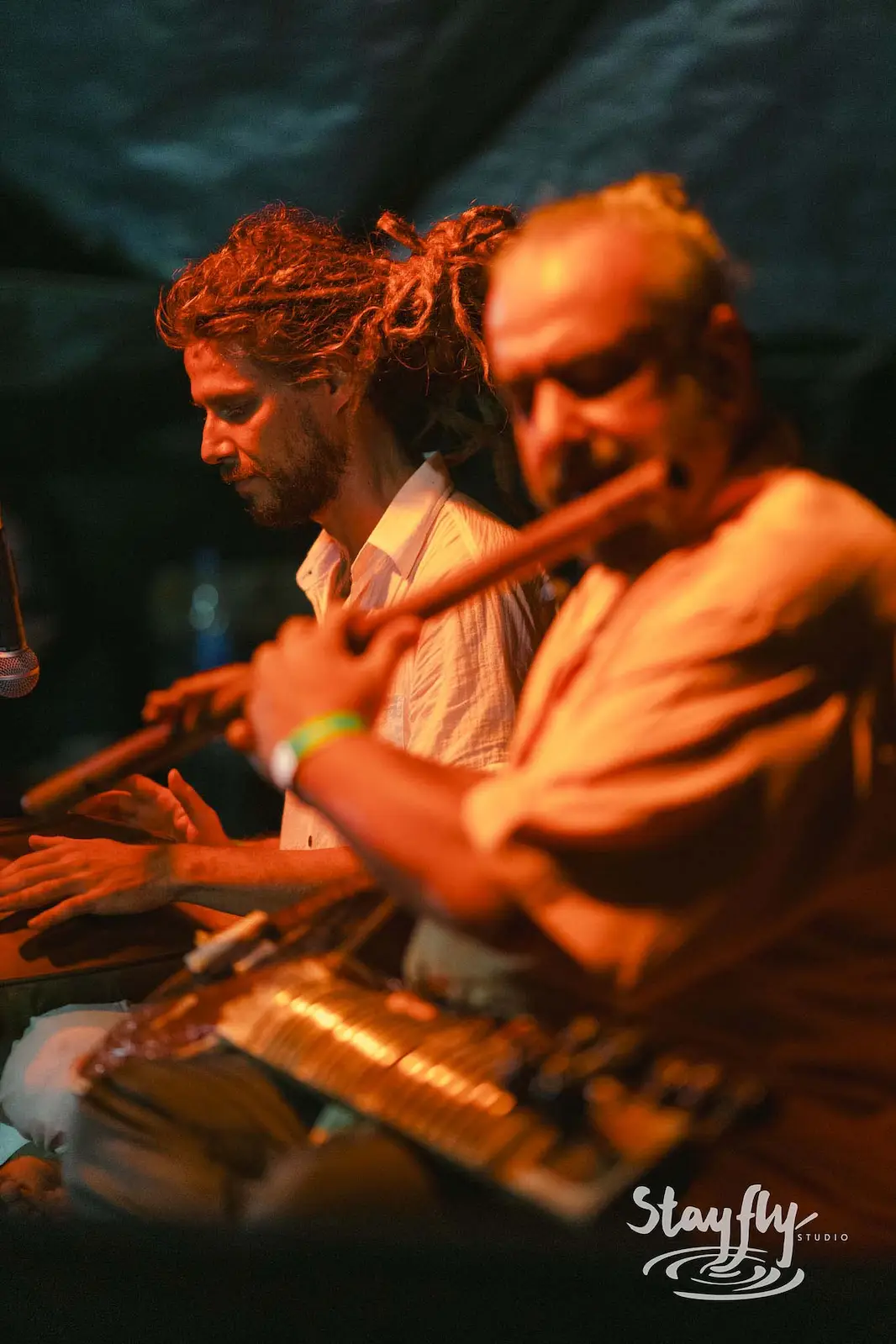
Where the gongs and bowls hold the ground, a flute is the thing you can follow. Bamboo pipes, a bansuri, a Native American style flute: small ranges, breathy tone, and a player who has to stop and take a breath, which is why the melody sounds like a person rather than a machine.
It is usually the last instrument to come in and the one people remember, because it is the only one carrying a tune.
And whatever else is on the cloth
Handpan, frame drum, koshi chimes, rattles, a rainstick, a shruti box, and the voice, which is the oldest of them and needs no case. Every practitioner lays their own set out before anyone arrives, and that layout is most of the plan.
Before you come
Sessions are offered for rest and relaxation. They are not medical treatment and make no claim to diagnose or cure anything. Gongs get loud, so tell the practitioner beforehand if you are sensitive to sound, and sit further back if you would rather. Most people lie down and many fall asleep, which is fine.
กิจกรรมนี้จัดขึ้นเพื่อการพักผ่อนและผ่อนคลายเท่านั้น ไม่ใช่การรักษาทางการแพทย์ และไม่ได้อ้างว่าสามารถวินิจฉัยหรือรักษาโรคใดได้
Come and hear it
Sound sessions run through the programme and at the festival, and the archive documents practitioners playing bowls, gongs and voice in past ones. Check the current programme for anything published now.
If you want something to listen to at home, Stayfly gives away seven sound bath recordings tuned to the chakras. They are computed rather than played, so they belong over there rather than here.
The recordings, on the Stayfly site
ฟังไฟล์บันทึกเสียงได้ที่เว็บไซต์ของ Stayfly
Both of them are part of the quiet layer under the festival. The rest of it is here.